| > Home > Back To Newsletters Page | |||||
|
| |||||
October 2023: It's Not A Quilt Until It's QUILTED!Of course. Yes, patchwork is endlessly fascinating; yes, piecing and applique and cutting and sewing and making a pattern or a picture is the bit almost all of us see first, but a quilt is so much more than just the "top" or the "flimsy" - and, until you layer it and add that through-stitching, by whatever means, it does not truly come to life. My first "proper" quilt is nice, (I still have it) but it's not quilted enough, and my technology (I hadn't discovered the Walking Foot) was inadequate. There is a school of thought that thinks that many recent quilts (note that I don't say "Modern") are over-quilted, stiff, and hard to love, but I see so many otherwise lovely pieces online and in exhibitions that are sadly let down by sparse or uneven or just plain boring quilting... And, so much poor advice "stitch in the ditch" they cry, ignoring the fact that it's impossibly difficult for beginners, and "every 10 inches" on batting packets - that leads to puffiness, sagging, and poor life-expectancy. (For the quilt, of course...) Now I (HH) love the quilting part of making a piece - it gives the surface texture, makes the patchwork robust, adds to the colours and shades of the quilt. I like simple quilting (slightly wobbly straight lines in one direction) and really fiendish quilting (a million leaves surrounding my Trees) and all varieties between (HB has asked to be excused, as, although she quilts, it's always even straight lines and very very tidy...)Helen Howes and AitchBee Contact us direct on newsletter@modernartquilters.co.uk Why not forward this message to your quilty friends who might enjoy our ramblings. They can CLICK HERE to go straight to our newsletter sign up page. HEADER IMAGE: Rainbow Forest Moon by HH - showing a lovely combination of machine and hand stitch quilting. This quilt is available to purchase on Helen's website: CLICK HERE for details |
|||||||
 Learn all these lovely 3-D textural quilting techniques with HH on a three-day TEXTURES course at Sew&So's of Bungay: 23rd, 25th & 27th October |
 Say "hello" to Palmerston Pig! This quizzical fellow forms part of HB's PIGS IN BLANKETS quilt. Join her for a three-day workshop at Sew&So's of Bungay: 5th, 12th & 19th November |
||||||
|
Click on any picture in this Newsletter to read more.
These are mostly links to external websites and blogs - have fun and enjoy looking!  |
|||||||
 |
BOM: This is part 8 or our FREE BLOCK OF THE MONTH quilt: Improv Double Cut Circles.
Only one more part to go! All the previous monthly instalments are available on our website - click on the image to see what you've missed. You've still got time to play catch-up before we show you how to put it all together in December |
||||||
 |
For anyone who hasn't heard of Leah Day (!?) she is an award winning quilter famed for her Free Motion Quilting (FMQ). In her blog Leah shares the challenge she set herself to create a FQM motif every day for a year!
Free-motion quilting is a drawing-with-stitch technique which is done with a hopping foot on your machine (alternatively called an embroidery or darning foot, terminology varies) then, with the feed dogs down (disengaged), you are free to move your fabric in any direction under the needle. There is no denying it takes some time to master - 15 minutes a day for three months is often quoted - but it is worth investing time for such amazing results. |
||||||
 |
Alyse of blog BLOSSOM HEART QUILTS shares and article entitled "5 Myths About Free Motion Quilting" in which she explains and consequently debunks some of these myths.
Mmm, perhaps it is time I (HB) took note of number 4! Read on to find out more... |
||||||
 |
Carolyn Friedlander is another exponent of FMQ. These photos show lovely quilting - simple but effective.
These images also show that FMQ can include straight lines too, but in a much more fluid and improv way - perhaps there's is hope for me (HB) yet? |
||||||
 |
Quilting with rulers (Parrs, Westalee and the like) is part-way between straight line and FMQ. Basically you use a special foot on your machine to follow the edge of a series of acrylic shapes (the same stuff as your straight measuring rulers are made of) to make a quilted design. You are limited to the designs and sizes made by the ruler company. Having never used this system we are not really in a position to comment... Suffice it to say - we have never been tempted to even try them, which should give you an idea of our opinion.
If you still want to have a go, find out more on this blog from OCRAFT |
||||||
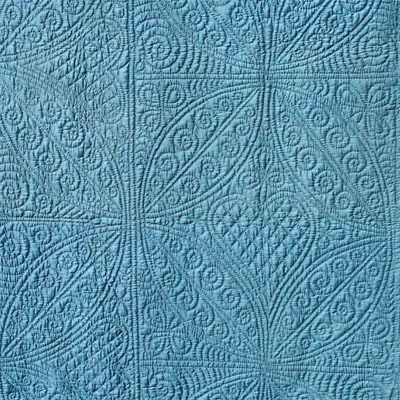 |
Of course in addition to machine quilting many people enjoy hand quilting. The Welsh, amongst many others, were famed for their beautiful whole-cloth quilts. As the name suggests, instead of being pieced in patchworked, the fronts of these were made from a single type of cloth and the entire design was made by hand stitching a pattern.
On her website, Carolyn Gibbs shares some of the beautiful quilts in her collection along with the history she has traced for them. |
||||||
 |
Preparing a piece of patchwork for quilting is a job probably none of us particularly enjoy, but it has to be done. Just like any big project, a good proportion of your time is wisely spent in the preparation
For anyone approaching the quilting stage of a project for the first time, as well as a reminder to those slightly more experienced, we have included a link to our FREE TUTORIAL on layering a quilt. |
||||||
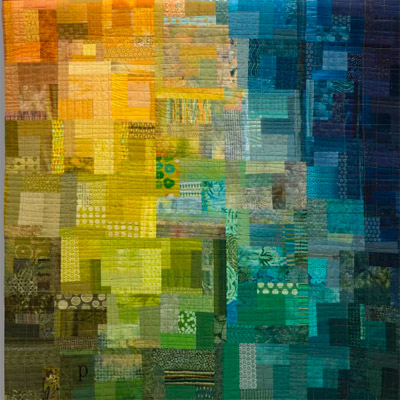 |
One of our favourite, and truly modern, quilters is Maria Shell. Here on her blog Maria reviews a book by a pair of quilters who have inspired her: Pat Pease and Wendy Hill. Their book, Creative Quilt Challenges sounds very interesting and, having read Maria's review, I may well be investing some money in it. I particularly likes Maria's comment that a journey is always better than a destination - very intriguing! | ||||||
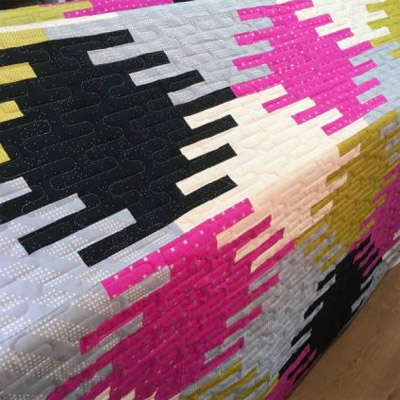 |
As we have said many times before: there is no shame in having a quilt long-arm quilted by a professional - or an amateur friend if you are lucky enough to one proficient enough.
This article on THE SEWING DIRECTORY gives you an excellent idea of the process of long-arm quilting as well as the questions you are likely to be asked by your quilter and the things you need to consider before you embark. |
||||||
 |
At talks and exhibitions we are often asked, even by fellow quilters, what we use for padding in our quilts. The answer is simple, with very few exceptions, we use a natural fibre quilt batting: cotton, wool or bamboo. We tend to avoid anything polyester (personal choice - it might be cheaper, but it will fight back and the economy isn't worth the heartache in our experience) and we certainly don't use the high loft (very puffy) poly-wadding often sold to unsuspecting novice quilters.
Our go-to supplier for wadding is DOUGHTY'S - excellent service and quick delivery - who also do lovely fabrics. |
||||||
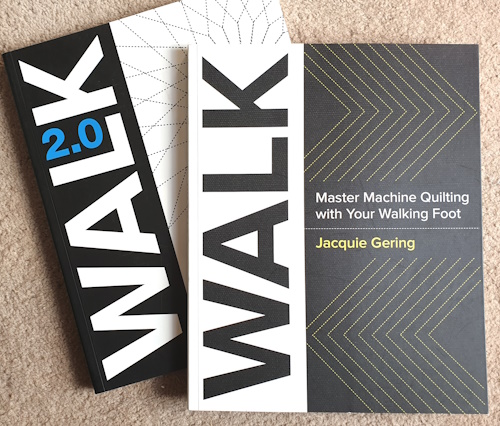 |
As HH rightly says - I am excused having to do free motion quilting! I can - she taught me well some years ago - but I choose not to since I don't enjoy it. I love to design and piece quilts, I only quilt from necessity. After all, it's not a quilt until it is quilted! So I stick to my walking foot and straight lines - what I view as "attainable quilting" so anyone wanting to make my designs isn't put off by the complexity of the quilting.
Straight line quilting doesn't just mean evenly spaced rows in one direction. If straight lines are your thing too, I would thoroughly recommend WALK and WALK 2.0 by Jacquie Gering - click on the image to read my review. |
||||||
 |
Contemporary Textile Art group FIBREFUSION are holding an exhibition with the intriguing title The Fragility of Nature - details below - Click on the image to visit the group's website.
The Pond Gallery Snape Maltings, Suffolk. IP17 1SP Friday 13th to Wednesday 25th October Open Daily 10 am to 4.30pm No Admission Fee |
||||||

|
|||||||
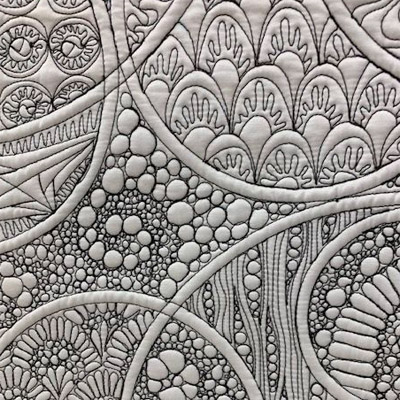 |
Be prepared to be astounded and amazed by the ingenuity of quilter in this month's Pinterest board QUILTING PATTERNS.
The important thing to remember is that YOU CAN DO THIS TOO! All it takes is a little bit of time every day and a willingness to learn. Click HERE to make a new account |
||||||
| Our mailing address is:- 4, The Raveningham Centre, Beccles Road, Raveningham, Norfolk, NR14 6NU. United Kingdom | |||||||